

What Documents Are Needed for Divorce Proceedings in Australia? Full Checklist & Guide
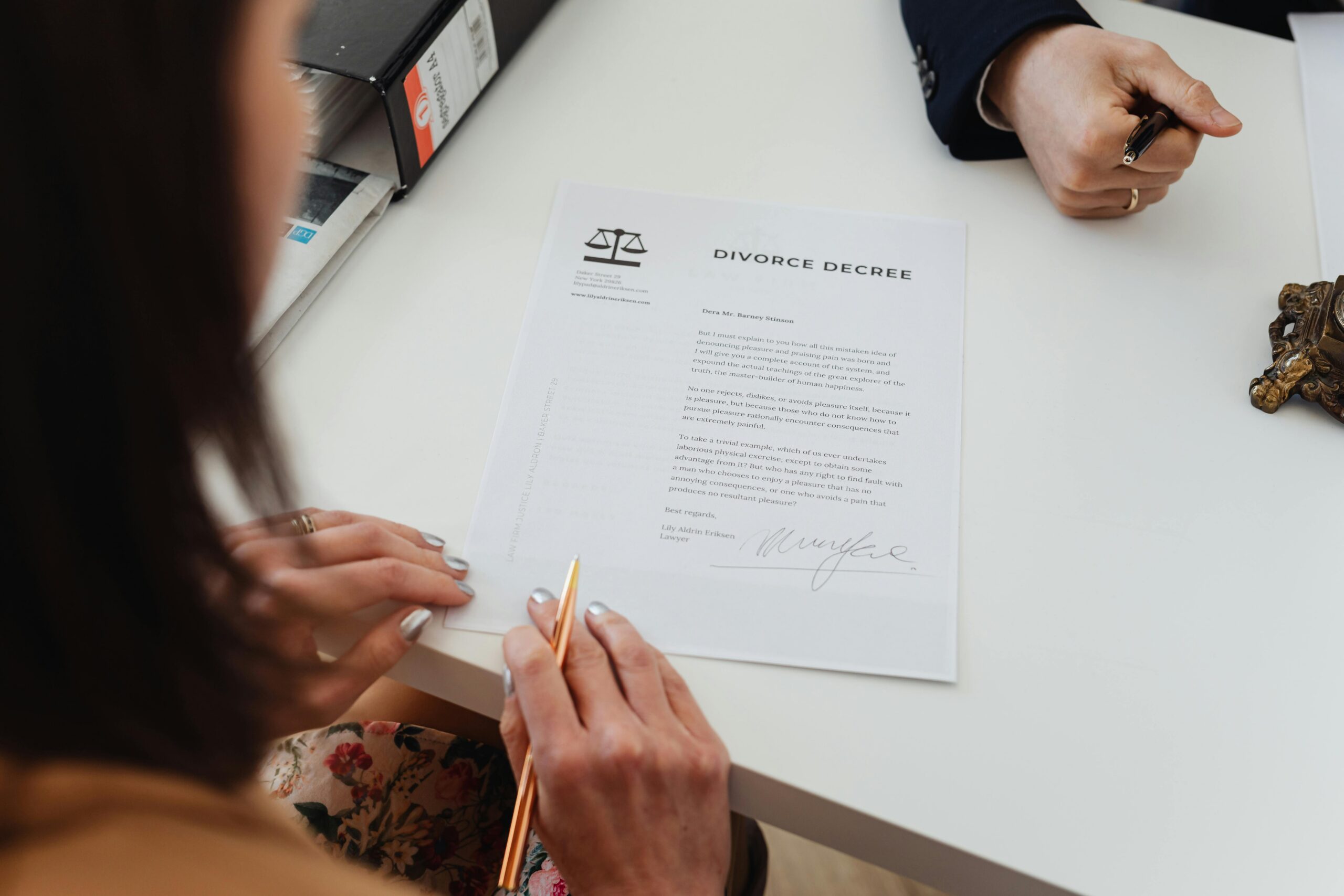
Divorce paperwork can feel overwhelming yet the core requirements are clear. In Australia the Family Law Act 1975 sets the rules and the Federal Circuit and Family Court of Australia manages applications. We focus on what you need so you can move forward with confidence.
Most applications start with a copy of your marriage certificate which doesn’t need to be original or certified. You’ll also need proof of separation and a counselling certificate if the marriage is less than 2 years. Proof of Australian citizenship or residency shows you’re eligible to apply. If you married overseas, you may need extra documentation.
If you’ve been separated under one roof for any part of the required 12 month period, you’ll need affidavits that explain your living arrangements. Once your documents are ready you can register and file through the e-Courts Portal. We’ll outline each document and why it matters so you can prepare a complete application.
Understanding The Role of Documentation in Divorce Proceedings

Documentation anchors each step of an divorce. Accurate papers establish eligibility under the Family Law Act 1975 and meet Federal Circuit and Family Court of Australia filing rules. Complete records support service, hearings, and final orders through the Commonwealth Courts Portal. Documentation is needed to:
- Prove eligibility and jurisdiction. Documents show citizenship or residency and the marriage location as required by the Family Law Act 1975.
- Confirm identity and marital status. Certificates and if required translations verify names and the legal relationship for the court file.
- Evidence separation and arrangements. Affidavits describe living apart and care of children to satisfy the no fault ground of divorce and requirement of proper arrangements for the children.
- Enable proper service. Service affidavits show the other party received the application or explain substituted service.
- Reduce delays and requisitions. Correct forms and supporting exhibits meet FCFCOA practice requirements.
Key divorce documents when applying for divorce:
| Document | Purpose | When required |
|---|---|---|
| Marriage certificate | Proves lawful marriage | All applications |
| Certified translation | Makes non -English certificates readable | Certificate not in English |
| Proof of Australian citizenship or residency | Confirms court jurisdiction | Applicant is an Australian citizen or resident |
| Application for Divorce form | Sets out marriage and separation facts | All filings via the Commonwealth Courts Portal |
| Proof of separation | Shows 12 months separation | All applications |
| Affidavit for separation under one roof | Explains separate lives at the same address | Any part of the 12 months under one roof |
| Counselling certificate | Shows counselling attended within the statutory period | Marriage under 2 years |
| Affidavit of service | Proves service on the other party | Sole applications |
| Affidavit for substituted service or dispensation | Explains why standard service is not possible | Spouse cannot be located or served |
| Citizenship certificate or visa | Evidence of status in Australia | Where citizenship or residency is relied on instead of birth |
| Affidavit explaining missing certificate | Accounts for an unavailable marriage certificate | Certificate cannot be obtained |
How documentation supports core legal tests:
- Establishes separation. Evidence shows 12 months separation with no reasonable likelihood of reconciliation as required by the Family Law Act 1975.
- Shows proper service. Service papers demonstrate fair notice in line with FCFCOA rules.
- Addresses children’s arrangements. Statements outline living and care arrangements where children under 18 exist at filing.
- Confirms translation accuracy. Accredited translations align with court standards for foreign documents.
- Verify identity. Consistent names across IDs, certificates, and forms prevent file queries.
Practical notes for Melbourne and across Australia
- File online through the Commonwealth Courts Portal. The Portal holds the Application for Divorce.
- Obtain Australian marriage certificate from the relevant state or territory Births Deaths and Marriages registry. Use the issuing foreign authority for overseas marriages.
- Provide two affidavits for separation under one roof. Include one from the applicant and one from an independent adult or add more detail from the applicant if no independent witness exists.
- Attach photos or bills only where they add probative value. Keep exhibits clear and legible.
- Use plain dates in day month year format. Match all dates across forms and affidavits.
- Family Law Act 1975 sets the no fault divorce framework and the separation test.
- Federal Circuit and Family Court of Australia sets practice directions, service rules, and filing protocols via the Commonwealth Courts Portal.
Core Documents Most Courts Require
Most courts ask for the same core set of divorce papers in Australia. We can prepare these quickly, then file through the Commonwealth Courts Portal.
Application
The Application for Divorce starts the case under the Family Law Act 1975. We complete the form online, then submit it as a sole or joint application through the Commonwealth Courts Portal. What the application does:
- Confirms jurisdiction, then state Australia as the place of filing under the Family Law Act 1975.
- Outlines marriage details, then set out the separation date and living arrangements.
- Declares any children under 18, then address their care and contact.
- Attach required exhibits, then lodge the application through the portal.
Marriage Certificate or Proof of Marriage
The marriage certificate proves the marriage. We file a copy, not the original.
- Provide an Australian BDM official extract of marriage certificate, then include the registry details for verification.
- Provide a foreign certificate, then include a certified English translation if not in English. Translation must be completed by an accredited translator. We make the arrangements for this to be done.
- Provide an affidavit explaining absence, then include secondary proof if the certificate is unavailable.
Personal Identification and Residency Evidence
Identity and residency show eligibility to apply in Australia. We file clear copies and:
- Provide photo ID, then include a passport or driver license.
- Provide citizenship evidence, then include an Australian citizenship certificate.
- Provide residency evidence, then include a permanent visa or valid visa grant notice.
Financial Disclosure and Asset/Liability Statements
Divorce only dissolves the marriage, not finances, but early disclosure avoids delay in obtaining property orders. We collate your documents and records then:
- List assets, then include bank accounts, real property, vehicles.
- List liabilities, then include mortgages, loans, credit cards.
- List income, then include payslips, tax returns, BAS.
- List superannuation, then include member statements and fund details.
Parenting Plans and Child-Related Orders
Courts check that proper arrangements exist for children under 18. We present practical care evidence.
- Outline living arrangements, then include nights with each parent.
- Outline schooling and health, then include school and GP details.
- Outline communication, then include calls, messages, changeovers.
- Provide a parenting plan or consent orders, then include any interim orders if they exist.
Proof Of Service and Service Affidavits
Service proves the other party received the papers. We use court forms and sworn evidence.
- Serve Form 3 and annexures by hand or post, then avoid self‑service for a sole application.
- File an Acknowledgment of Service if signed, then exhibit the signed page.
- File an Affidavit of Service by Hand or by Post if no acknowledgment, then detail date, time, place.
- Seek substituted service or dispensation, then file an affidavit explaining attempts if location is unknown.
Declarations, Affidavits, And Supporting Exhibits
Affidavits cover special circumstances and attach evidence. We draft concise, factual statements and attend to execution of affidavits including:
- Separation under one roof details, then explain separate bedrooms, finances, social presentation.
- Translation and overseas marriage facts, then attach NAATI translation and foreign documents.
- Change or identity clarifications, then attach deeds, IDs.
- Service facts, then attach photographs, messages, search notes.
| Requirement or Step | Key Number | Authority or Context |
|---|---|---|
| Minimum separation period | 12 months | Family Law Act 1975, no‑fault divorce |
| Effective date after divorce order | 1 month 1 day | Federal Circuit and Family Court of Australia practice |
| Service timeframe if spouse in Australia | 28 days before hearing | FCFCOA service rules |
| Service timeframe if spouse overseas | 42 days before hearing | FCFCOA service rules |
| Respondent time to file a response in Australia | 28 days from service | FCFCOA procedure |
| Respondent time to file a response overseas | 42 days from service | FCFCOA procedure |
| Deadline to start property or financial orders | 12 months after divorce order | Family Law Act 1975 |
We are here to help you
We make this process clear to the other party wherever possible as amicable as can be between the parties. We draw on 30+ years in Melbourne family law experience. David Littlejohn’s practical background as a former barrister will support you if the divorce is complex or contested. We plan the filing, we prepare the affidavits, we sort service on time, and we present child and property context in a way the court accepts.
Variations By Jurisdiction and Situation
Requirements may shift depending on your location and your circumstances. We align your divorce documents to Melbourne practice and Federal Circuit and Family Court of Australia rules and procedures.
Separation Evidence and Waiting Periods
Separation must last at least 12 months before filing divorce in Australia. Separation can occur under one roof, provided you can prove by affidavit the living of separate lives. In such a situation you will need to:
- Provide proof of separation, for example bank statements, lease or mortgage records, Centrelink or Medicare letters, and messages confirming the date.
- Provide information for your affidavit if separated under one roof, as well as supporting affidavits confirming separate lives.
- Describe daily arrangements in affidavits, for example separate bedrooms, separate finances, separate social lives, and separate chores.
- Include a counselling certificate if the marriage is less than 2 years (which we can arrange for you).
- Explain any exception in an affidavit if counselling did not or cannot occur, for example risk of family violence or inability to locate your spouse.
- Confirm eligibility in your documents, for example Australian citizenship, permanent residency, or 12 months ordinary residence.
Overseas Marriages, Translations, and Apostilles
Overseas marriages attract extra document checks. Accuracy and authenticity sit at the core. In such a situation the Applicant needs to:
- Obtain the official foreign marriage certificate, or file an affidavit if the certificate is unavailable.
- Attach an English translation by an accredited translator if the certificate is not in English, and attach the translator’s affidavit.
- Match names across documents, for example passports, visas, and the marriage certificate, or explain any differences in an affidavit.
- Provide authenticity support where relevant, for example an apostille or consular confirmation from the issuing country, subject to availability. An Apostille is a specialized certificate that simplifies the process of authenticating documents for international use.
- File certified copies of identity and status documents, for example passport bio page, citizenship certificate, or permanent resident visa grant.
Domestic Violence Protections and Confidential Address Forms
Safety takes priority in family law filings. The court accepts confidential contact arrangements.
- Use a PO Box, an email address, or a trusted third-party address on your divorce application. You can also use our law firm’s office address.
- Withhold your physical address if disclosure poses risk, and if necessary, file an affidavit explaining safety concerns.
- Request alternate service methods where direct service risks harm, for example service by email, service on a lawyer, or substituted service orders.
- Refer to family violence evidence where relevant, for example intervention orders, police reports, medical reports, or refuge letters.
| Requirement | Standard | Detail |
|---|---|---|
| Separation period | 12 months | Applies across Australia under the Family Law Act 1975 |
| Service inside Australia | 28 days before hearing | Sole applications require proof of service |
| Service outside Australia | 42 days before hearing | Time runs to first court date |
| Filing fee | $1,125 as at 1 July 2025 | Federal Circuit and Family Court of Australia fee |
| Reduced fee | $375 as at 1 July 2025 | Available with concession or financial hardship |
We prepare, file, and serve your documents through the Commonwealth Courts Portal. We lodge translations with the translator affidavit. We draft clear affidavits that meet Federal Circuit and Family Court of Australia practice for Melbourne and regional registries.
Preparing, Filing, And Serving Your Paperwork
We keep the process simple and precise. We follow Federal Circuit and Family Court of Australia rules across Melbourne suburbs.
Obtaining Certified Copies and Notarization
We start with the right evidence. We lodge a clear copy of the marriage certificate, original or certified copy not required, unless the court directs otherwise. We attach a certified English translation after foreign certificates, for example non- English BDM records. We file affidavits to explain missing records, for example lost overseas certificates. We arrange JP or lawyer witnessing for affidavits, for example separation under one roof, substituted service, service acknowledgment. We collect proof of citizenship or residency, for example citizenship certificate, Australian passport, permanent resident visa. Our service includes:
- Gathering: obtain marriage certificate, obtain translations, obtain residency proof
- Certifying: obtain translation of non-English records, with certification of translations.
- Explaining: prepare affidavit if a certificate is unavailable, explain separation, explain service steps.
Proper Service on Your Spouse
We arrange service for sole applications. Personal service by the applicant is not permitted or recommended. We use post, process server, or an adult third party. We complete proof of service forms, for example affidavit of service and acknowledgment of service. We seek substituted service or dispensation by affidavit if your spouse cannot be located.
Attending the Divorce hearing
We attend the hearing when required, for example where children under 18 are involved or where the court lists the matter for certain issues. Wherever possible we appear on your behalf without the need for you to attend court unless the Court require you to attend in person regarding any disputed issues. Once we complete the court appearance, we note the divorce order date, then calendar diarise the effective date one month and one day later effective date.
Avoiding Common Mistakes
We have seen self -represented paperwork errors derail otherwise straightforward divorces. We keep your application accurate and court ready under the Family Law Act 1975 and FCFCOA rules.
Overcoming Missing Documents or Incomplete Information:
- Confirm core proofs first. Confirm a clear marriage certificate, proof of separation for 12 months, and evidence of Australian citizenship or residency.
- Attach translations where relevant. Attach certified translations for any non- English marriage certificate or affidavit.
- File affidavits for special cases. File affidavits for separation under one roof, substituted service, and name differences across IDs.
- Match details across forms. Match names, dates of birth, marriage date, and addresses across the Application for Divorce, IDs, and certificates.
- Upload legible copies online. Upload complete scans via the Commonwealth Courts Portal with all pages and any annexures.
- Track the separation clock precisely. Track 12 months of separation before filing and track the one month and one day gap before the divorce order takes effect.
- Serve on time and prove service. Serve the other party in line with FCFCOA service rules and lodge the correct proof of service forms.
- Follow Melbourne practice directions. Follow current FCFCOA and Victoria registry requirements for e-Filing, affidavits, and hearing attendance when listed.
- Monitor portal notifications daily. Monitor the Commonwealth Courts Portal for listing dates, requisitions, and orders to avoid adjournments.
Ensure Court Attendance if Required for these reasons:
- Disputed facts, if documents raise questions about separation dates or living arrangements then you may be required to give evidence.
- Child considerations, if the court wants clarity on the presence of children under 18.
- Service issues, if substituted service or dispensation requires judicial oversight.
We guide you through each step, if you want calm, precise help with divorce documents in Melbourne.
We help you prepare with confidence. We can review your draft application troubleshoot tricky facts and guide you through the online portal. If safety or overseas issues apply, we map a secure and compliant approach. Reach out for a focused consult and bring what you have. We will outline gaps set next steps and keep your matter on track. Your documents tell your story so let’s make sure they speak clearly and meet the court rules.
Where do I stand?
Book a call to talk to a lawyer.
Frequently Asked Questions
What documents do I need to file for divorce in Australia?
You’ll generally need: a marriage certificate, proof of separation for at least 12 months, proof of Australian citizenship or residency, ID, and the Application for Divorce. If married overseas, provide the official foreign certificate and certified translations. If separated under one roof, include affidavits explaining living arrangements. You may also need documents about children, parenting plans, and proof of service.
Where do I file my divorce application?
File online via the Commonwealth Courts Portal. Create an account, complete the Application for Divorce, upload clear scans of supporting documents, pay the filing fee, and track updates in your portal account.
How long must we be separated before filing?
You must be separated for at least 12 months and one day. Separation under one roof counts if supported by affidavits explaining separate lives, finances, and household arrangements.
Do I need proof of Australian citizenship or residency?
Yes. Provide an Australian passport, citizenship certificate, or evidence of residency (e.g., visa, visa grant notice, or proof of living in Australia). These documents establish the court’s jurisdiction under the Family Law Act 1975.
What if we were married overseas?
You can apply in Australia if you meet residency or citizenship requirements. You must submit the official foreign marriage certificate and a certified English translation. If documents are unavailable, file an affidavit explaining why and any alternative evidence.
What is an affidavit and when is it needed?
An affidavit is a sworn statement. It’s required for separation under one roof, difficulties serving documents, name mismatches, overseas documents, or special circumstances (e.g., safety concerns). It should be clear, factual, and attach supporting exhibits.
How do I prove separation?
Use consistent evidence: separate finances, different sleeping arrangements, messages or emails ending the relationship, updated government records, lease or bills, and affidavits from you or a third party. Explain household roles, social separation, and finances.
How do I serve divorce documents on my spouse?
Service must meet court rules. Use personal service (not by you), post, or electronic service if allowed. File an Affidavit of Service to prove delivery. If you can’t locate your spouse, apply for substituted service or dispensation.
What if I can’t find my marriage certificate?
If married in Australia, order a copy from the state or territory Births, Deaths and Marriages registry. For overseas marriages, get a certificate from the foreign authority and a certified translation. If unavailable, file an affidavit explaining attempts to obtain it.
Do I need a lawyer for divorce paperwork?
Not mandatory, but recommended for complex cases: separation under one roof, overseas documents, disputed facts, safety risks, citizenship/residency issues, or service problems. A lawyer helps prepare affidavits, check compliance, and avoid delays.
What are common mistakes to avoid?
Missing documents, name or date mismatches, unreadable scans, inconsistent financial details, wrong service method, ignoring Melbourne/Federal Court rules, and filing before the 12-month separation. Other mistakes include failure to double-check forms, upload clear copies, and keep timelines.
How much does a divorce cost?
There’s a court filing fee (subject to change). You may qualify for a reduced fee if you hold certain concession cards or face financial hardship. Legal fees are separate and vary with complexity.
Will there be a court hearing?
Most straightforward applications are decided on the papers. A hearing may be required if there are disputed facts, issues about service, concerns about children, or incomplete documents. Some applications that are not contested may still require a hearing, for instance if there are children under 18 years of age, but the lawyer can attend on the client’s behalf without the client being there.
What about children and property issues?
The divorce application asks about children’s care, but parenting and property settlements are separate legal processes. You can seek orders or agreements separately if needed.
How can I protect my safety when filing?
You can request confidential contact details, use a safe address, and apply for alternative service methods. Inform the court about any family violence orders and seek legal advice for tailored safety measures.
When Professional Help Is Advisable
Most divorces use standard court forms under the Family Law Act 1975. Some situations add risk or delay, but timely advice can avoid errors.
How we help with divorce documents:
- Document checks, if you want fast confirmation that your application for divorce, proof of separation, and affidavits meet court rules.
- Evidence drafting, if your case needs clear affidavits about separation under one roof or service attempts.
- Translation coordination, if overseas marriage certificates need certified translations or extra proof.
- Service strategies, if personal service fails and you need substituted service or dispensation.
- Risk controls, if you need safe address handling or private contact details on file.
- Detail alignment, if dates, names, and facts must match across IDs, marriage records, and online filings.
- Filing support, if you want correct uploads on the Commonwealth Courts Portal and legible copies.
- Hearing preparation, if the court lists your matter due to children or document issues.
Why Littlejohn Legal?
- Local experience, if you want a Melbourne family law firm with 30+ years of continuous practice.
- Seasoned leadership, if you value guidance from our Principal David Littlejohn, admitted in 2000 and experienced in many legal areas as a barrister and solicitor.
- Proven growth, if firm history matters through our 2014 founding and later acquisitions of Michael Benjamin & Associates and Rigoli Lawyers.
- Clear communication, if you prefer plain-English explanations of court documents and next steps.
- Joined-up service, if your divorce intersects with property, wills, or criminal matters across our wider practice, we can take care of all those matters for you.
What to bring to your first chat:
- Core ID, if you hold an Australian passport, driver licence, or citizenship certificate.
- Marriage record, if you can access an official marriage certificate or a certified copy.
- Separation proof, if you hold dated messages, bank statements, or lease details.
- Parenting details, if there are existing care arrangements or school information.
- Service details, if you know your spouse’s address or have evidence of attempts.
- Overseas documents, if you married abroad and hold translated certificates.
Find us on maps:
More related content:
Family & Divorce Lawyers Glenroy